Tanzania:
Where Africa’s Wild Landscapes Meet the Indian Ocean
Tanzania is a country of extraordinary scale and contrast.
In the north, enormous herds move across the Serengeti plains. Above them rises Mount Kilimanjaro, Africa’s highest mountain. Along the coast, the Indian Ocean meets a world of coral islands, Swahili history and white-sand beaches. Farther south and west, vast wilderness areas offer a quieter experience of Tanzania, while the Great Rift Valley cuts through landscapes shaped by volcanoes, lakes and ancient human history.
For many travellers, Tanzania is synonymous with safari. But the country is much more than its wildlife.
It is a place where geology, conservation, culture and history come together across an immense landscape.
The Serengeti and the Great Migration
The Serengeti is perhaps Tanzania’s most famous landscape.
Its name has become almost synonymous with the idea of the African wilderness: open grasslands, acacia trees, predators and enormous herds moving across the horizon.
The annual migration of wildebeest, zebra and gazelles is one of the world's great natural spectacles. UNESCO describes the Serengeti as a vast savannah ecosystem of about 1.5 million hectares, where more than a million wildebeest and hundreds of thousands of other ungulates undertake a long annual movement in search of pasture and water.
But the Serengeti is not simply a stage for the migration.
Its ecosystems support lions, cheetahs, elephants, giraffes, hyenas, leopards, black rhinoceroses and an extraordinary diversity of birds and smaller animals.
The landscape changes with the seasons. Green plains become golden grasslands, rivers shrink and fill, and wildlife constantly responds to the movement of water and food.
That rhythm is at the heart of the Serengeti.
Ngorongoro: A World Inside a Crater
Not far from the Serengeti lies the Ngorongoro Conservation Area, another of Tanzania's defining landscapes.
The Ngorongoro Crater is a vast volcanic caldera surrounded by steep walls. Inside, grasslands, forests, wetlands and a permanent water supply create an unusually concentrated habitat for wildlife.
The wider conservation area is important for another reason: wildlife and people share the landscape.
Maasai communities continue to live and practise pastoral traditions within the conservation area, making Ngorongoro more than a wildlife destination. It is also a place to consider the complicated relationship between conservation, culture and land.
UNESCO recognizes the Ngorongoro Conservation Area as one of Tanzania's World Heritage properties.
Mount Kilimanjaro
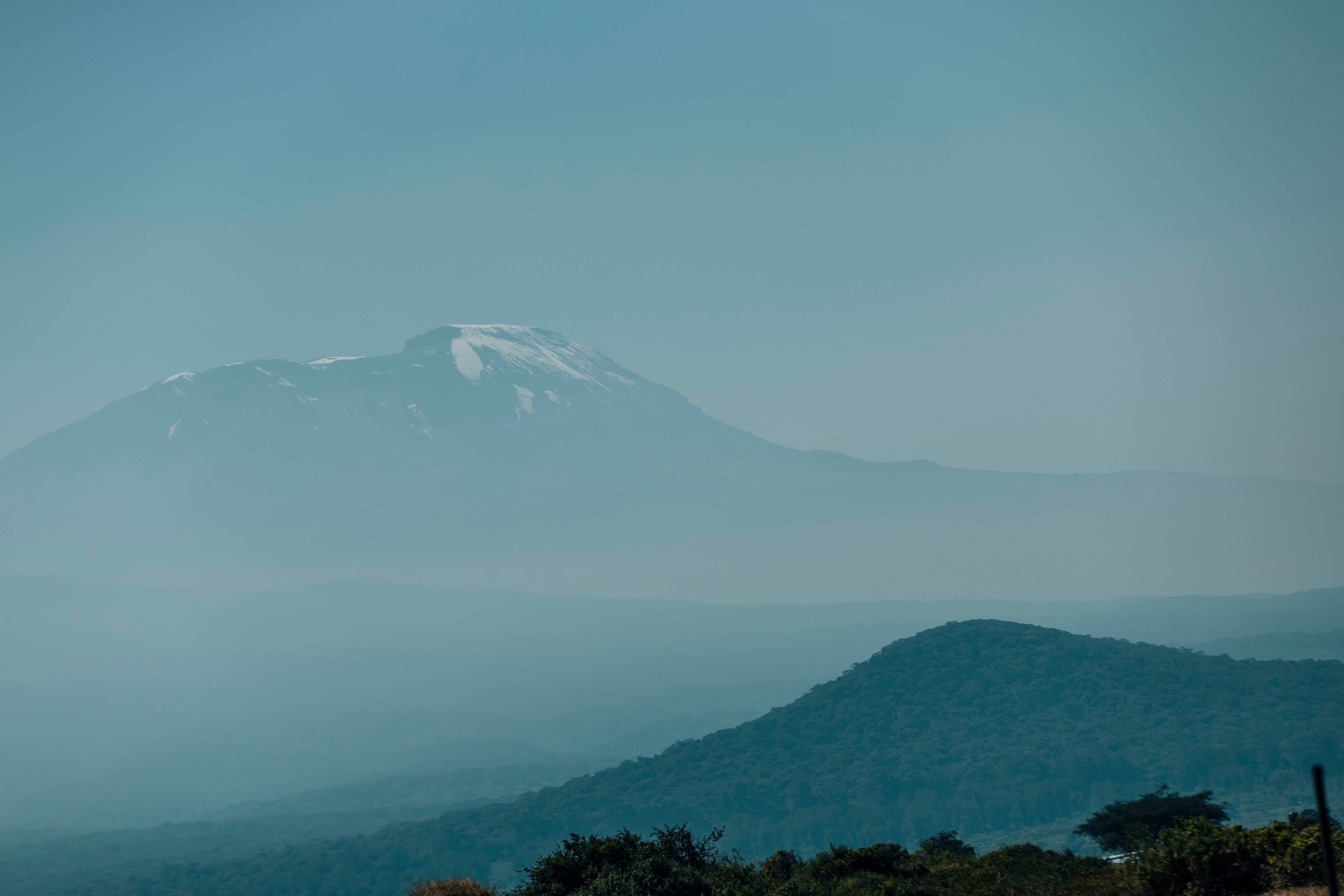
Rising above northern Tanzania, Mount Kilimanjaro is Africa's highest mountain.
Its snow-covered summit has become one of the continent's most recognizable natural images, but the mountain is more than a symbol.
Kilimanjaro rises through several ecological zones, from cultivated land and forest to alpine environments and the high volcanic summit.
The mountain's presence also shapes the surrounding landscape. From the lower slopes, Tanzania's northern plains stretch toward some of the country's most important wildlife areas.
Kilimanjaro National Park is recognized by UNESCO for its natural significance.
Beyond the Famous Safari Circuit
Tanzania's best-known destinations are only part of the story.
In the south, Ruaha National Park offers huge landscapes, baobab-studded plains and important populations of elephants and predators. Nyerere National Park, formerly associated with the Selous ecosystem, contains enormous areas of riverine and woodland habitat.
In the west, the Mahale Mountains rise beside Lake Tanganyika, creating one of Tanzania's most unusual wildlife settings.
Here, forest-covered mountains descend toward one of the world's great lakes, while chimpanzees live among the surrounding forests.
These southern and western landscapes offer a different vision of Tanzania: more remote, less crowded and often defined by wilderness rather than iconic landmarks.
Tanzania's Lakes and the Great Rift Valley
Some of Tanzania's most remarkable places are shaped by water.
Lake Tanganyika forms part of the country's western frontier and is one of the deepest freshwater lakes on Earth. Lake Victoria, shared by Tanzania, Kenya and Uganda, forms another enormous part of the country's northern landscape.
Then there is Lake Natron, a shallow and highly alkaline lake beneath the volcanic landscape of northern Tanzania.
Its extreme environment supports one of East Africa's important lesser flamingo breeding areas.
Around the lake, the volcanic cone of Ol Doinyo Lengai rises above the Rift Valley.
The result is one of Tanzania's strangest landscapes: mineral-rich water, flamingos, volcanic mountains and enormous skies.
Zanzibar and the Swahili Coast
Tanzania's story does not end on the mainland.
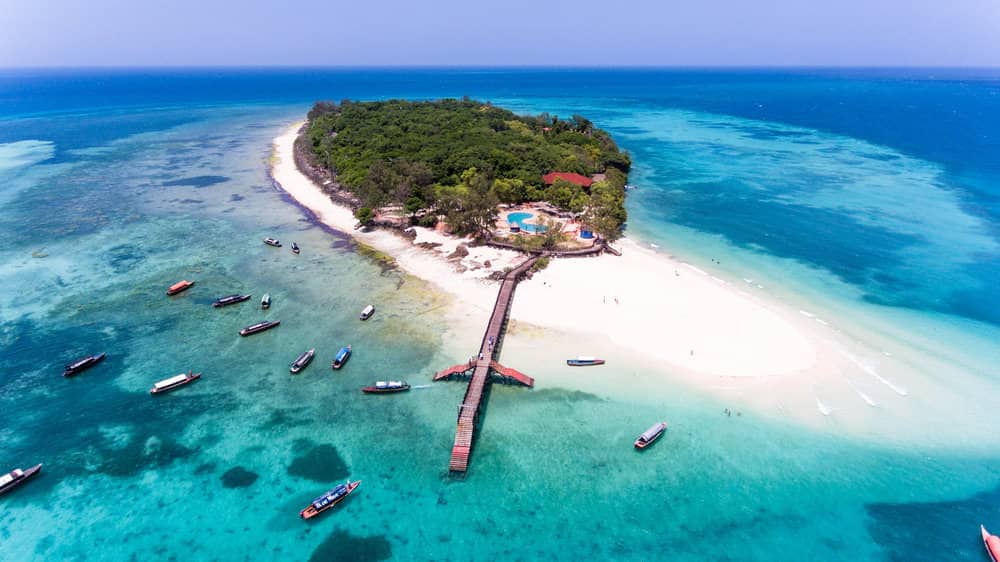
Off the coast lies Zanzibar, an island whose history has been shaped by African, Arab, Persian, Indian and European influences.
Stone Town, with its narrow streets, carved wooden doors and historic buildings, reflects centuries of trade across the Indian Ocean. UNESCO recognizes Stone Town of Zanzibar as a World Heritage property.
Beyond the historic centre, the Zanzibar archipelago is known for beaches, coral reefs and marine life.
The islands offer a completely different experience from the savannahs of northern Tanzania — but they are part of the same national story.
The Indian Ocean has shaped Tanzania just as profoundly as the Serengeti has shaped its image of wilderness.
A Country of Living Cultures
Tanzania is home to many communities, languages and traditions.
Swahili is central to the country's identity and to the wider history of the East African coast. Maasai pastoral communities are among the country's best-known cultural groups, while many other communities contribute their own languages, food, music, crafts and traditions.
For travellers, experiencing this diversity responsibly means going beyond staged encounters.
Markets, food, music, museums, community-led tourism and locally guided experiences can offer a deeper understanding of the country and its people.
Culture should not be treated as scenery.
It is part of what makes Tanzania a living place rather than simply a collection of tourist attractions.
Tanzania's Wild Places
Tanzania's greatest asset may be the sheer variety of landscapes that remain connected to wildlife.
The country's protected areas range from grassland and woodland to mountains, wetlands, forests and coastal ecosystems.
This diversity is why Tanzania can offer such radically different wildlife experiences within the same country.
One journey might begin among elephants and baobabs in the south, continue through the open plains of the Serengeti and end beside the Indian Ocean.
The landscapes change.
The wildlife changes.
The cultures change.
But the sense of scale remains.
Why Tanzania Matters
Tanzania is often described as a safari destination.
That description is accurate, but incomplete.
It is also a country of volcanoes and ancient lakes, mountain forests and coral islands, archaeological sites and living cultures.
Its most famous places — Serengeti, Ngorongoro, Kilimanjaro and Zanzibar — are famous for good reason. But the deeper story lies in the connections between them.
The migration of animals across the plains.
The movement of people across the Indian Ocean.
The geological forces that created the Rift Valley.
The communities that have adapted to these landscapes for generations.
And the conservation efforts attempting to keep these ecosystems alive.
Tanzania is not one landscape.
It is many Africas in one country.
The Tanzania Worth Discovering
For a first-time visitor, the obvious destinations can provide an unforgettable introduction.
But the further you travel, the more Tanzania reveals itself.
There are remote national parks, little-known lakes, volcanic landscapes, historic coastal settlements, mountain forests and communities whose stories rarely appear in the standard safari itinerary.
That is where the country's next chapter of exploration begins.
Beyond the famous names is a Tanzania that is quieter, wilder and considerably more complex.
And it is worth taking the time to look.