
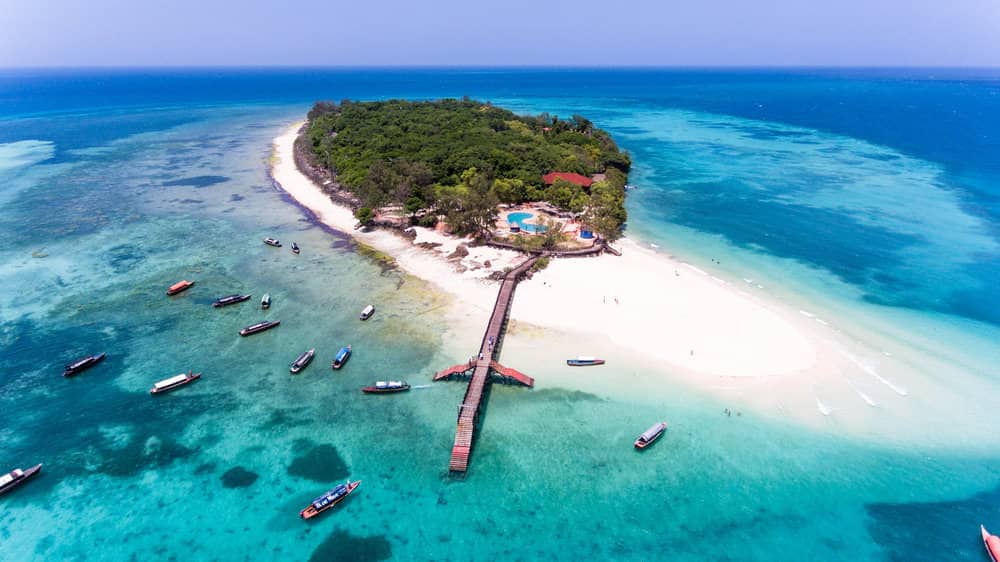
The Story of Zanzibar Island: History, Culture & Heritage
Zanzibar is an island of beaches, spices, historic towns and deep cultural connections across the Indian Ocean. Located off the coast of mainland Tanzania, the Zanzibar archipelago has been shaped by African coastal communities and centuries of interaction with Arabia, Persia, India and other parts of the Indian Ocean world.
Today, travelers know Zanzibar for its white-sand beaches, turquoise waters, spice farms and historic streets. But the island's identity reaches far beyond tourism.
Its story includes the development of Swahili coastal culture, Indian Ocean trade, the rise of the Sultanate of Zanzibar, the expansion of the clove trade, the history of slavery, British colonial influence, the Zanzibar Revolution and the union that created modern Tanzania.
To understand Zanzibar is to understand a place where African history and Indian Ocean history meet.
Where Is Zanzibar?
Zanzibar is an archipelago in the Indian Ocean, approximately off the coast of mainland Tanzania in East Africa.
The name Zanzibar is commonly used when referring to the main island, Unguja, although the Zanzibar archipelago includes several islands. Pemba is another major island within the archipelago.
Zanzibar's position in the Indian Ocean has played a central role in its history.
For centuries, sailors and merchants used the seasonal monsoon winds to travel between the East African coast, Arabia, Persia and India. These maritime connections helped create networks of trade and cultural exchange that shaped the islands.
The ocean was not a barrier separating Zanzibar from the wider world. It was one of the main routes connecting the islands to it.
The Early History of Zanzibar
Zanzibar's history began long before European colonial rule and the rise of the nineteenth-century sultanate.
The islands formed part of the wider Swahili Coast, where African coastal communities developed settlements connected to maritime trade.
Archaeological evidence from the East African coast shows long-standing connections between coastal communities and trading networks across the Indian Ocean. Goods moving through these networks included ceramics, beads, metals, textiles, food products and other commodities.
Zanzibar therefore developed within a much larger coastal civilization rather than as an isolated island society.
African communities formed the foundation of Swahili coastal societies, while centuries of interaction brought additional cultural, linguistic, religious and commercial influences.
The Rise of Swahili Culture
Swahili culture is central to Zanzibar's identity.
Swahili society developed along the East African coast through centuries of interaction between African communities and people connected to Indian Ocean trade.
The result was a distinctive coastal culture expressed through:
- Language
- Architecture
- Food
- Music
- Clothing
- Religion
- Maritime traditions
- Trade and commerce
The Swahili language has Bantu foundations and contains vocabulary acquired through centuries of contact with Arabic and other languages.
In Zanzibar, Swahili culture remains part of everyday life.
It can be experienced in local food, markets, music, architecture, religious traditions and community life.
Zanzibar and Indian Ocean Trade
Zanzibar's location made it an important participant in Indian Ocean commerce.
Ships connected the East African coast with ports in Arabia, Persia and India. Merchants traded commodities including ivory, spices, timber, textiles, ceramics and other goods.
These commercial networks also moved people, ideas, languages, technologies and religious traditions.
Zanzibar became an important commercial center because of its position within these maritime networks.
Trade influenced the development of settlements and helped transform Stone Town into a major urban and commercial center.
But this history also has a darker dimension. Some of the commercial systems that generated wealth were connected to the trafficking and enslavement of people.
Understanding both aspects is essential to understanding Zanzibar's history.
Stone Town: The Historic Heart of Zanzibar
Stone Town is the historic urban center of Zanzibar City and one of the best-known expressions of the island's cultural heritage.
Its narrow streets contain buildings associated with centuries of commerce and settlement. Coral-stone structures, markets, mosques, former merchant houses and elaborately carved wooden doors reflect the many communities that have shaped the city.
African, Arab, Indian, Persian and European influences can be seen in different aspects of Stone Town's architecture and history.
The city developed as a center of commerce and political power, but it was also a place where families, merchants, sailors, workers and communities lived alongside one another.
Today, Stone Town remains a living urban environment rather than simply a historical monument.
Its streets, buildings, markets and waterfront continue to connect Zanzibar's present with its past.
The Sultanate of Zanzibar
Zanzibar became increasingly important during the nineteenth century as Omani influence expanded along the East African coast.
Sultan Said bin Sultan moved his court and capital from Muscat to Zanzibar in 1840. Zanzibar subsequently became an important political and commercial center within the Omani Sultanate.
The sultanate's influence extended beyond the islands into parts of the East African mainland.
During this period, Zanzibar's agricultural economy also expanded.
Clove plantations became particularly important, contributing significantly to the island's wealth and international commercial connections.
However, this economic system was also closely associated with slavery and forced labor.
The prosperity of nineteenth-century Zanzibar therefore cannot be separated from the exploitation experienced by enslaved people.
The Spice Trade and the "Spice Island"
Zanzibar became internationally associated with spices, especially cloves.
The islands' tropical climate supported the cultivation of cloves, coconuts and other crops. During the nineteenth century, clove production became an important part of Zanzibar's economy.
This history gave Zanzibar its enduring nickname:
The Spice Island.
Spices remain part of the visitor experience today.
Travelers can visit farms and learn about crops such as:
- Cloves
- Cinnamon
- Cardamom
- Nutmeg
- Vanilla
A spice tour therefore offers more than an introduction to tropical plants. It provides a connection to an agricultural tradition that has played an important role in Zanzibar's economic and cultural history.
The History of Slavery in Zanzibar
The history of Zanzibar cannot be fully understood without acknowledging the Indian Ocean slave trade.
Zanzibar became an important center within regional networks through which enslaved people were transported from parts of East and Central Africa to coastal markets and other destinations.
Enslaved people were subjected to forced labor in plantations, households and other settings.
The trade generated wealth for merchants and political elites while causing profound suffering and disrupting communities across East and Central Africa.
The legacy of slavery remains visible in Zanzibar.
Historic sites associated with the slave trade and slavery are places of remembrance and education. They help visitors understand the human cost behind aspects of the island's nineteenth-century commercial development.
This difficult history is an important part of Zanzibar's heritage and should not be separated from the story of its economic growth.
Zanzibar Under British Influence
European political influence increased across East Africa during the late nineteenth century.
In 1890, Zanzibar became a British protectorate while the Sultanate continued to exist.
British influence increasingly shaped the island's political affairs and international relationships.
One of the best-known events of this period was the Anglo-Zanzibar War of 1896.
The conflict followed a dispute over the succession to the sultanate. It was extremely brief, lasting less than an hour, and is commonly described as the shortest war in recorded history.
The episode reflected the changing political balance in Zanzibar and the growing influence of the British Empire.
Zanzibar Independence
Zanzibar became independent from British colonial rule in December 1963.
The transition did not resolve the island's political tensions.
Social, political and economic divisions remained, contributing to the revolution that followed only weeks later.
The Zanzibar Revolution of 1964
On 12 January 1964, revolutionaries overthrew the Sultanate of Zanzibar.
The revolution brought major political and social change and was accompanied by significant violence and upheaval.
The events of 1964 remain an important and sometimes sensitive part of Zanzibar's modern history.
Later that year, on 26 April 1964, Zanzibar entered into a union with Tanganyika.
The union created the United Republic of Tanganyika and Zanzibar, which was later renamed the United Republic of Tanzania.
Zanzibar has remained part of Tanzania while retaining substantial autonomy over many internal matters.
Zanzibar's Cultural Heritage Today
Zanzibar's history remains visible in everyday life.
Swahili is widely spoken, and Islam has played an important role in shaping the islands' cultural landscape.
Food also reflects centuries of exchange across the Indian Ocean.
Coconut, seafood, rice and spices feature prominently in many local dishes, while ingredients and culinary traditions reflect connections between East Africa and the wider Indian Ocean world.
Music is another important part of Zanzibar's cultural heritage.
Taarab is one of the island's best-known musical traditions and reflects the cultural interactions that have shaped coastal East Africa.
Life Beyond Stone Town
Zanzibar's heritage extends well beyond its historic urban center.
Rural communities, fishing villages, agricultural areas, forests, coral reefs and coastal settlements all form part of the islands' identity.
The relationship between people and the ocean remains particularly important.
Fishing and maritime activities have supported coastal communities for generations, while traditional sailing vessels such as dhows continue to represent Zanzibar's long connection with the Indian Ocean.
The natural environment is therefore inseparable from the cultural story of the islands.
Zanzibar Today
Zanzibar is now one of East Africa's best-known travel destinations.
Visitors come for its beaches, coral reefs, historic architecture, food, spices and cultural experiences.
Yet the island's appeal cannot be reduced to its tropical scenery.
In Stone Town, historic buildings stand alongside modern businesses and everyday community life.
In agricultural areas, spice-growing traditions continue.
Along the coast, fishing communities maintain relationships with the sea that have existed for generations.
Tourism has created important economic opportunities while also creating questions about conservation, heritage protection, environmental pressure and sustainable development.
For Zanzibar, preserving cultural and natural heritage is an important part of maintaining the character that makes the islands distinctive.
Why Zanzibar's History Matters
Zanzibar's history demonstrates how deeply connected East Africa has always been to the wider world.
For centuries, African coastal communities participated in Indian Ocean commerce and cultural exchange.
The history of Zanzibar also demonstrates that cultural exchange can have very different consequences.
Trade helped move languages, foods, technologies, religious traditions and ideas across the ocean.
At the same time, commercial networks were connected to exploitation, including slavery and forced labor.
Understanding both dimensions provides a more complete picture of the island.
A Living Heritage
Zanzibar's heritage is not confined to museums or historical dates.
It can be found in language, architecture, food, music, religion, markets, farms and coastal communities.
The carved doors of Stone Town, the aroma of cloves on a spice farm, Swahili conversations in local markets and dhows moving across the Indian Ocean all represent different parts of the same historical story.
That story has been shaped by generations of African communities and by centuries of connections across the Indian Ocean.
From the development of Swahili coastal society to the rise of the sultanate, from the spice economy to the history of slavery, from British rule to the 1964 Revolution, Zanzibar has experienced profound political, economic and cultural transformations.
Today, the islands remain a remarkable meeting point between African and Indian Ocean histories.
Zanzibar may first attract travelers with its beaches and warm waters, but its history gives the destination a much deeper meaning.
Zanzibar is not only an island to visit. It is an island to understand.
Explore Zanzibar
Continue discovering Zanzibar with ASILI Discovery: