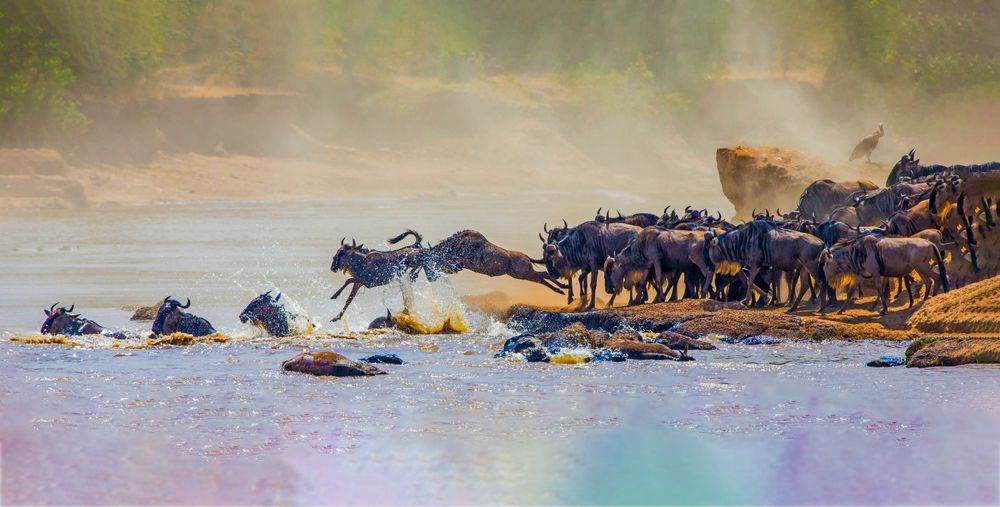
Wildebeest Migration in Tanzania: The Great Serengeti Journey
The wildebeest migration in Tanzania is one of the most remarkable wildlife movements on Earth. Each year, more than a million wildebeest, accompanied by large numbers of zebra and other grazing animals, move across the Serengeti ecosystem in search of fresh grass and water.
Often called the Great Wildebeest Migration, this extraordinary natural cycle is not a single event that happens on one day or in one location. It is a continuous movement shaped by rainfall, vegetation, water availability, animal behaviour, predators, and the changing conditions of the Serengeti.
For travellers, the migration offers some of Africa's most memorable wildlife experiences. For researchers and students, it provides an important example of animal movement, predator-prey relationships, ecosystem dynamics, and the relationship between climate and wildlife.
What Is the Great Wildebeest Migration?
The Great Wildebeest Migration is the annual movement of large herds of wildebeest across the Serengeti ecosystem of northern Tanzania and into Kenya's Maasai Mara ecosystem.
The migration is driven primarily by the availability of nutritious grazing. Seasonal rainfall causes new grass to appear in different parts of the ecosystem, encouraging the herds to move in a broad annual cycle.
Although the movement is often described as a circular migration, the actual route and timing can vary from year to year. Rainfall does not always arrive at exactly the same time or in the same places, so the location of the herds can change according to environmental conditions.
This is why there is no single "migration day" and no guaranteed date for a particular wildlife event.
Where Is the Wildebeest Migration in Tanzania?
Most of the Tanzanian portion of the migration takes place within the greater Serengeti ecosystem, including the southern plains, central Serengeti, western areas and northern Serengeti.
Different parts of the ecosystem become important at different times of the year.
The southern Serengeti and Ndutu region are particularly important during the calving period. As the herds move north and west, areas around the central and western Serengeti become significant. Later in the year, northern Serengeti becomes one of the most closely watched areas because of the possibility of wildebeest crossing the Mara River.
The migration therefore cannot be understood by looking at one park or one destination alone. It is an ecosystem-wide phenomenon.
Wildebeest Migration Month by Month
The timing of the migration changes from year to year, but the following pattern provides a useful general guide.
January to March: Calving Season in the Southern Serengeti
Early in the year, large concentrations of wildebeest gather in the southern Serengeti and the Ndutu area.
This period is famous for the wildebeest calving season. Thousands of calves are born during a relatively short period when fresh grazing is available.
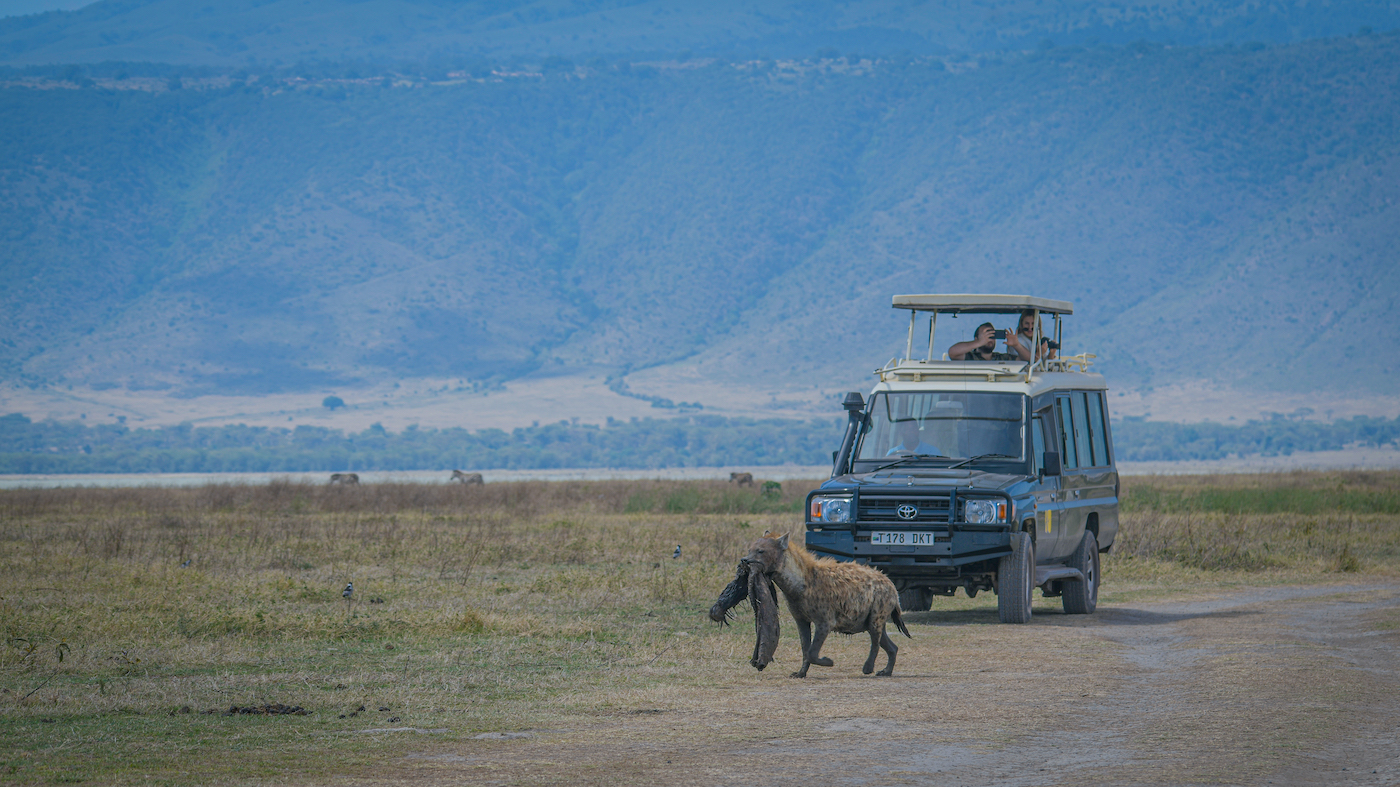
Calving creates extraordinary opportunities for wildlife observation, but it also attracts predators. Lions, cheetahs, hyenas and other predators take advantage of the abundance of young animals.
For travellers interested in animal behaviour and predator-prey relationships, the calving season can be one of the most rewarding periods of the migration.
April to May: Moving Through the Serengeti
As grazing conditions change, the herds begin moving away from the southern plains.
The exact timing varies with rainfall. Some animals move towards the western Serengeti while others may take different routes through the ecosystem.
This period is sometimes associated with longer movements and less predictable herd locations, making local knowledge particularly valuable for travellers hoping to follow the migration.
June to July: Western Serengeti and Northern Movement
By the middle of the year, many herds are moving through western and central parts of the Serengeti and gradually towards the north.
The Grumeti River can become an important feature of the migration. Crossing rivers exposes wildebeest to strong currents, steep banks and predators, making these moments some of the most dramatic scenes associated with the journey.
However, not every herd crosses at the same time, and the river crossings should never be treated as guaranteed events on a fixed date.
July to October: Northern Serengeti and Mara River
During the northern phase of the migration, herds can gather in the northern Serengeti, including areas around Kogatende.
This is the period most commonly associated with the famous Mara River crossings.
Wildebeest may approach the river, wait for suitable conditions, and then suddenly move across. A crossing can happen quickly, while at other times animals may remain near the river for hours or days.
The unpredictability is part of what makes the experience so compelling.
Travellers visiting northern Serengeti during this period should remember that seeing large herds does not necessarily mean witnessing a river crossing. Wildlife behaviour cannot be scheduled like a human event.
October to December: Return Towards the South
As rainfall changes across the ecosystem, the herds begin moving south again.
The migration gradually returns towards the southern Serengeti, continuing the annual cycle and preparing the landscape for another calving season.
By the end of the year, the cycle begins again.
Why Do Wildebeest Migrate?
The primary reason for the wildebeest migration is access to food and water.
Wildebeest are grazers, and their movement is closely connected to the availability of fresh, nutritious grass. Seasonal rainfall changes the distribution and quality of vegetation across the Serengeti ecosystem.
Rather than following a perfectly fixed route, the herds respond to changing environmental conditions.
Rainfall therefore plays a major role in determining where the animals move, although other factors also influence their behaviour, including water availability, vegetation, terrain, predators and interactions within the herds.
The migration is an excellent example of how wildlife movement can be connected to wider ecological processes.
The Wildebeest Calving Season
The calving season is one of the most important stages of the migration.
Large numbers of calves are born when grazing conditions are favourable. The abundance of young animals provides opportunities for predators, creating intense interactions between herbivores and carnivores.
For researchers and students, the calving season provides an opportunity to study reproduction, population dynamics, maternal behaviour, predator-prey relationships and survival strategies.
For photographers and wildlife travellers, it offers a very different experience from the dramatic river crossings of northern Serengeti.
Mara River Crossings
The Mara River crossing is one of the most famous scenes associated with the Great Wildebeest Migration.
As herds move through northern Serengeti towards Kenya's Maasai Mara, groups of wildebeest may cross the Mara River.
A crossing can involve hundreds or thousands of animals, but the timing is unpredictable.
Wildebeest may gather at the riverbank and hesitate before crossing. When one group finally moves, others may follow rapidly. The river presents natural hazards, including deep water, strong currents and steep banks, while crocodiles may be present in the river.
It is important to understand that the Mara River crossing is one part of the migration, not the migration itself.
The annual journey continues before and after the crossings.
Where Is the Best Place to See the Wildebeest Migration?
There is no single best place for the entire migration because different locations become important at different times.
For the calving season, the southern Serengeti and Ndutu region are particularly significant.
For western movements and river activity, parts of the western Serengeti can become important.
For northern migration activity and potential Mara River crossings, northern Serengeti — including the Kogatende area — is a major destination.
The best location therefore depends on what a traveller wants to experience.
Someone interested in newborn animals and predator activity may prefer the southern Serengeti during calving season. Someone hoping to see the dramatic river crossings may choose northern Serengeti during the appropriate period.
When Is the Best Time to See the Wildebeest Migration in Tanzania?
There is no single best month for everyone.
The best time depends on the particular stage of the migration a traveller wants to experience.
- January–March: Calving season and predator activity in the southern Serengeti.
- April–May: Herd movement through the Serengeti as grazing conditions change.
- June–July: Increasing movement towards western and northern areas.
- July–October: Northern Serengeti and potential Mara River crossings.
- October–December: Movement southwards towards the southern Serengeti.
These periods are approximate rather than fixed. Rainfall and ecological conditions can shift the timing from one year to another.
Tanzania or Kenya for the Great Migration?
The Great Migration crosses national borders, but Tanzania contains much of the annual migration cycle.
The Serengeti is particularly important because the herds spend substantial parts of the year moving through Tanzania before some continue north into Kenya's Maasai Mara.
Kenya's Maasai Mara is famous for the northern phase of the migration and the Mara River crossings, while Tanzania provides opportunities to experience other stages, including the southern calving season.
For travellers, choosing between Tanzania and Kenya depends on the timing of the trip and the specific wildlife experience they want.
For researchers, the migration is best understood as one connected ecological system rather than as two separate national events.
Wildlife That Travels With the Wildebeest
Wildebeest are the most visible species associated with the migration, but they are not alone.
Large numbers of zebra move through parts of the ecosystem alongside wildebeest. Gazelles and other herbivores also participate in seasonal movements.
The concentration of herbivores supports an extensive community of predators and scavengers.
Lions, cheetahs, leopards, hyenas, crocodiles and other predators benefit from the abundance of prey, while vultures and other scavengers play important roles in processing animal remains.
The migration is therefore more than the movement of one species. It is an ecological process involving many interconnected species.
The Role of Rainfall and Climate
Rainfall is one of the most important factors influencing the migration.
Seasonal rains stimulate plant growth, creating fresh grazing areas. As conditions change, the herds respond by moving towards areas where food and water are available.
This relationship makes the migration particularly interesting for ecological research.
Changes in rainfall patterns, drought, land use, climate variability and ecosystem conditions can influence the availability of food and water and, consequently, animal movement.
Understanding these relationships is increasingly important for long-term wildlife conservation.
Why the Migration Matters for Conservation
The wildebeest migration demonstrates why large ecosystems cannot always be managed effectively as isolated areas.
Migratory animals move across large landscapes and may cross different management areas and international borders during their annual journey.
Protecting migration routes therefore requires cooperation between conservation authorities, communities, researchers, tourism operators and governments.
Maintaining access to grazing areas, water sources and movement corridors is essential for the long-term health of migratory wildlife populations.
The migration also supports tourism economies and provides employment and income for communities connected to the Serengeti ecosystem.
Responsible Wildlife Tourism During the Migration
Seeing the wildebeest migration is a privilege, but responsible tourism is essential.
Visitors can help protect the experience and the ecosystem by following park regulations, keeping a respectful distance from wildlife, remaining in designated areas and avoiding actions that disturb animals.
Travellers should also choose responsible safari operators that respect conservation rules and local communities.
During river crossings, vehicles and visitors should never attempt to influence animal behaviour for a better photograph.
The goal should be to observe natural behaviour rather than create it.
What Researchers and Students Can Learn From the Migration
The Great Wildebeest Migration provides a valuable natural system for studying a wide range of subjects.
Researchers can investigate:
- Animal migration and movement ecology.
- Predator-prey relationships.
- Herbivore population dynamics.
- Reproductive strategies and calving.
- Seasonal rainfall and vegetation patterns.
- Climate variability and wildlife behaviour.
- Ecosystem connectivity.
- Conservation of migratory corridors.
- Human-wildlife relationships.
- Sustainable tourism and protected-area management.
For students, the migration offers a practical example of how biology, ecology, geography, climate science, conservation and tourism can intersect within one ecosystem.
A Journey Bigger Than a River Crossing
The Mara River crossing is spectacular, but it represents only a small part of the Great Wildebeest Migration.
The real story is the complete annual cycle: the search for fresh grazing, the birth of thousands of calves, movement across vast grasslands, encounters with predators, river crossings, changing weather and the eventual return towards the southern Serengeti.
Understanding this wider cycle makes the migration even more remarkable.
It is not simply a line of animals moving across a map. It is a dynamic relationship between wildlife, rainfall, grasslands, rivers, predators and the people who share this extraordinary ecosystem.
Experiencing the Wildebeest Migration in Tanzania
For travellers planning a safari, the most important question is not simply, "When can I see the migration?"
A better question is:
Which part of the migration do I want to experience?
If your priority is newborn wildebeest and predator activity, consider the southern Serengeti during calving season.
If you want to follow the herds northwards, the timing and location will depend heavily on rainfall and local conditions.
If your dream is to witness a Mara River crossing, northern Serengeti during the appropriate migration period offers one of the best opportunities — but no responsible safari operator can guarantee a crossing on a particular day.
The unpredictability is part of the wilderness.
The Great Serengeti Journey
The wildebeest migration in Tanzania is one of nature's great spectacles, but its importance goes beyond tourism.
It demonstrates the scale of ecological connections across the Serengeti ecosystem and shows how animals respond to seasonal changes in food, water and climate.
For travellers, it is an unforgettable wildlife experience.
For researchers, it is a living example of migration ecology and ecosystem dynamics.
For students, it offers a window into biology, geography, conservation and environmental science.
And for anyone interested in Africa's wildlife, it is a reminder that the most extraordinary natural events are often not single moments, but journeys that unfold across an entire landscape and throughout an entire year.